
English| EUR
Suggested for you
More currencies
Choose a language
The ascent of Florence Cathedral's dome remains one of the city's most sought-after experiences, yet confusion surrounds the logistics. This guide clarifies the process, from entry requirements to what you encounter inside the narrow passages.
Quick answer
How to climb the Duomo begins with securing a Brunelleschi Pass (30 EUR), which grants access to the 463-step ascent through claustrophobic staircases winding between the dome's inner and outer shells. The climb is open weekdays from 08:15 to 19:30, Saturdays until 17:15, and Sundays from 12:45 to 17:15, with last entry recommended before 16:30 to avoid afternoon crowds and heat.
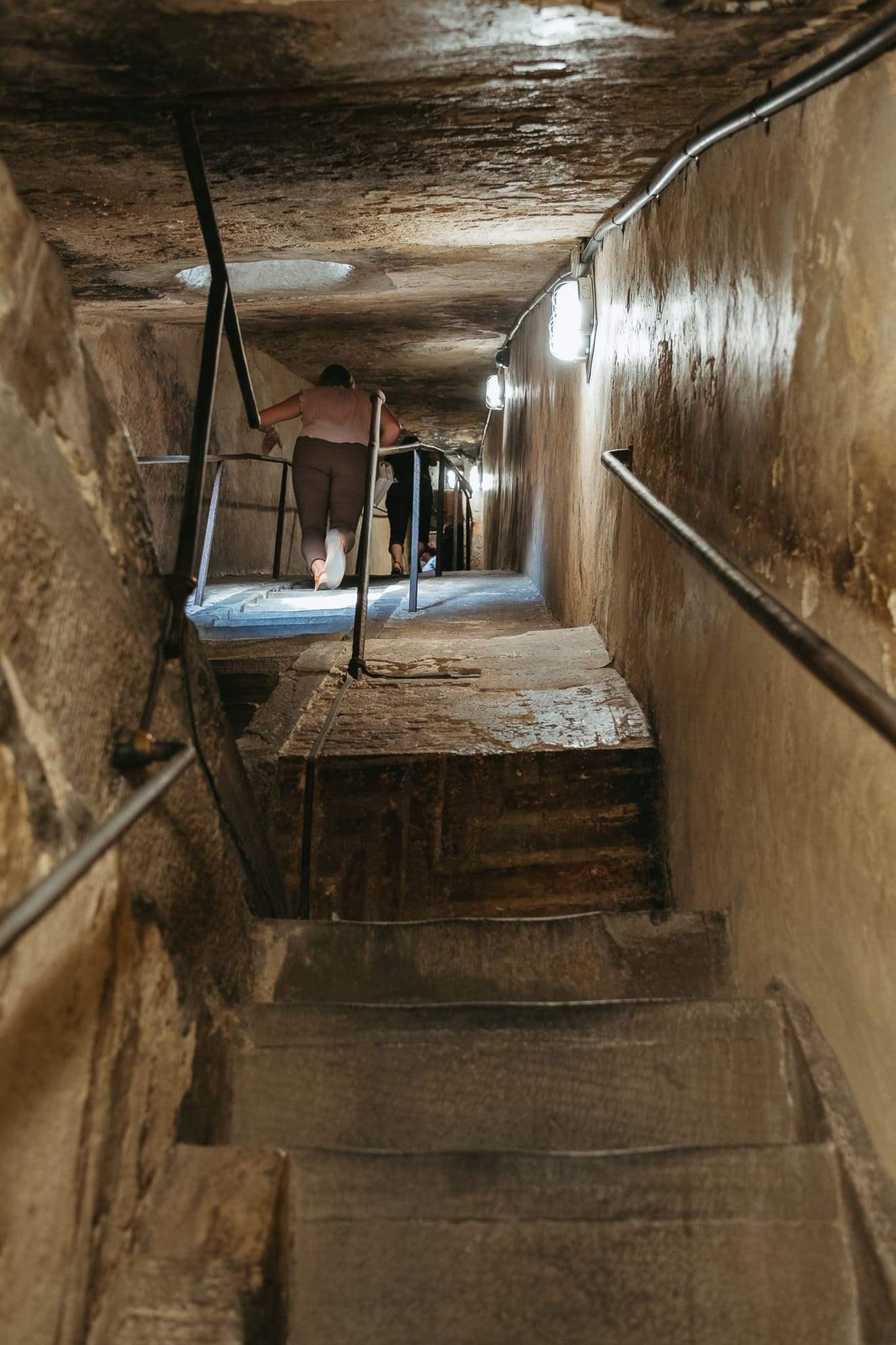
The dome's spiral staircase narrows to less than a meter in places, a consequence of the double-shell construction Filippo Brunelleschi engineered in 1436 without traditional scaffolding. Visitors ascend through the cavity between these shells, encountering Giorgio Vasari's Last Judgment frescoes at eye level midway through the climb—a perspective impossible from the cathedral floor below. The 463 steps are uneven, worn smooth by centuries of pilgrims and travelers. How to climb the Duomo requires moderate fitness; there are no elevators, and the passages offer few rest points once you commit to the ascent. The route includes steep stone steps, wooden ladders, and segments where the walls curve inward, amplifying the sense of enclosure. Arriving during the morning window allows cooler temperatures and thinner crowds in these confined spaces. The cupola's lantern crowns the ascent at 114 meters, revealing Florence's terracotta rooftops, the Arno cutting through the city center, and the hills of Fiesole to the northeast. The Brunelleschi Pass covers the dome alongside the Baptistery's Byzantine mosaics, Giotto's Bell Tower, the Opera del Duomo Museum's original Ghiberti panels, and the Santa Reparata crypt beneath the cathedral nave. Booking ahead secures entry during preferred hours, particularly for sunrise access or late-afternoon light across the Tuscan landscape. Climbing Brunelleschi's dome means navigating Renaissance engineering at intimate scale—handrails follow herringbone brickwork patterns, and ventilation shafts pierce the masonry at calculated intervals. The experience demands awareness of physical space and timing, rewarding preparation with unmediated access to one of architecture's most audacious achievements.
“The 463 steps wind through the cavity between the dome's double shells, bringing visitors face-to-face with Vasari's frescoes at a perspective impossible from below.”
The climb begins at the cathedral's north side entrance and ascends 463 steps through Renaissance frescoed corridors and narrow staircases to the lantern viewpoint. The entire experience takes 45–60 minutes depending on crowd density and photo stops.
Reserve your entry through the official Opera di Santa Maria del Fiore portal, selecting a specific date and time slot. Walk-up tickets sell out by mid-morning during peak season.
Locate the entrance on the left flank of the cathedral facing the facade—many visitors mistakenly queue at the main cathedral doors, which access only the floor level.
Ascend the first 150 steps to the base of the dome where you walk along interior balconies beneath Vasari's Last Judgment frescoes. The catwalk has low railings; stay on the marked path.
Continue through the narrow spiral staircase built between the dome's inner and outer shells. The passage width forces single-file traffic and creates brief bottlenecks during crowded periods.
Emerge onto the 360-degree terrace circling the lantern base, 114 meters above street level. The metal barriers are waist-high; supervise children closely and secure loose items against wind.
The dome climb is open throughout the week, though daily operating hours vary between weekdays and weekends.
The cathedral enforces strict dress and conduct codes to preserve the sacred character of the space. Physical fitness and proper attire are non-negotiable for the 463-step ascent.
A few practical steps will keep the ascent smooth and comfortable.
Everything you need to know about how to climb the duomo
To successfully climb the duomo, you must secure a Brunelleschi Pass in advance as space is strictly limited. Planning ahead helps ensure you can access the terraces and take in the architecture of this iconic Florence landmark.
Visitors cannot enter the dome without a valid ticket purchased for a specific time slot. Finding out how to climb the duomo requires coordinating your schedule with the official entry windows to avoid being turned away at the entrance.
The climb consists of 463 steps that lead visitors through the narrow corridors between the inner and outer shells. Preparing for this vertical ascent is an essential part of learning how to climb the duomo effectively.
Large bags and backpacks are not permitted inside the complex for security and logistical reasons. When researching how to climb the duomo, ensure you plan to leave oversized luggage elsewhere to avoid issues at the checkpoint.
The climb is physically demanding and involves steep, narrow stairs that may be unsuitable for those with heart conditions, vertigo, or claustrophobia. While there is no official age limit, visitors should assess their own fitness before attempting to reach the summit.
To reach the top, follow the signs inside the cathedral directing you toward the Porta della Mandorla entrance. Following the marked path is the standard procedure for those wondering how to climb the duomo and reach the panoramic viewpoints.
The Brunelleschi Pass covers the dome, the Bell Tower, the Baptistery, the Museum, and the Crypt. This comprehensive pass is the only way to gain entry to these historic Florentine structures.